
Fixed-Rate vs. Variable-Rate Installment Loans
Almost every installment loan in Texas uses a fixed rate. Your interest rate and your monthly payment stay the same for the whole loan term. Variable rate loans are rare for this loan type — they show up more often in lines of credit or real estate-secured loans.
This guide explains what each rate type means and why lenders default to a fixed rate for this loan type. It also covers the one case where variable could still make sense for you.
Table of Contents
What a Fixed Rate Installment Loan Means
A fixed rate means your interest rate never changes. You sign the loan contract, and that number is locked in until the loan is paid off. Your monthly payment amount stays the same too, from your first payment to your last.
A fixed rate also makes the payment split easy to track, since the loan amortization schedule separates exactly how much of each payment goes to interest versus principal.
Early payments cover more interest. Later payments cover more principal. The total payment amount never moves.
What a Variable Rate Loan Means
A variable rate can rise or fall during the loan. It moves with a market index the lender ties the loan to. If that index goes up, your rate goes up too. Your payment can increase, even if you never missed a payment.
This makes budgeting harder. You cannot know today what the loan will cost you next year.
Fixed Rate vs Variable Rate at a Glance
The table below sums up the practical difference for the borrower.
Features |
Fixed Rate |
Variable Rate |
|
Interest rate |
Stays the same for the whole loan |
Can rise or fall with the market index |
|
Monthly payment |
Same amount every month |
Can change if the rate moves |
|
Budgeting |
Easy to plan around |
Harder to predict long term |
|
How common in Texas |
Standard- nearly all lenders |
Rare for this type of loan |
|
Where it is more common instead |
_______ |
Lines of credit, real estate secured loans |
Why Most Texas Installment Loans Are Fixed Rate
Fixed-rate installment loans are simply the standard product most lenders build for this loan type. A locked-in rate is easier for both sides to plan around than one that can move with the market.
In practice, almost every lender chooses a fixed rate for installment loans.
Your specific rate still depends on the factors that move your rate up or down, including your credit history, income, and the loan amount you request. But the rate type itself is fixed once you sign.
When You Might See a Variable Rate
Variable rates show up mostly in loans tied to real estate or open lines of credit, not small installment loans. A home equity loan is one example. A revolving credit line is another.
If you are applying for a standard installment loan, expect a fixed-rate offer. A variable rate on this loan type would be unusual enough to ask the lender about directly.
Which One Costs Less?
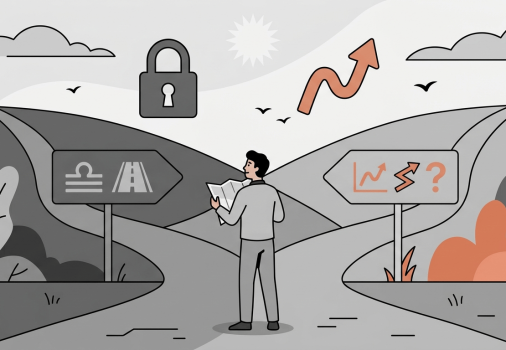
A fixed rate is sometimes slightly higher at the start than a variable rate. But a fixed rate protects you from a rate increase later in the loan.
This trade-off only tends to favor a variable rate on a short loan you plan to pay off fast. For most Texas borrowers, the rate itself is only part of the real cost.
Say you borrow $5,000 for three years. A fixed rate might keep your payment at $160 every month, from your first payment to your last. A variable rate on that same loan might start lower, near $150. But it could climb to $180 or more if the rate index it’s tied to rises partway through the loan.
A fixed rate keeps that whole picture predictable from day one, and the full APR and fee math behind your final number is worth checking before you compare offers.
How to Decide Between the Two
Choose fixed if you want your payment to never change, or if you are working with a tight monthly budget. This covers most borrowers taking out a standard installment loan.
A variable rate could fit you in one case: you plan to pay off the loan fast, and can handle a payment going up without breaking your budget. Rate type is just one part of that decision, though, and installment loans from the ground up names every basic term worth knowing before you settle on one.
Frequently Asked Questions
Is an installment loan usually fixed-rate or variable-rate?
Almost every installment loan uses a fixed rate. Variable-rate installment loans are uncommon in this state. Most lenders only offer a fixed rate for this loan type.
Can my monthly payment change during an installment loan?
No, not with a fixed-rate loan. Your payment amount stays the same every month until the loan is paid off. This is one of the main reasons borrowers choose an installment loan over a revolving credit line.
Are variable rate loans ever cheaper than fixed rate loans?
Sometimes, at the very start. A variable rate can begin lower than a fixed-rate offer. But it can rise later in the loan, which erases that early savings. A fixed rate avoids this risk completely.
When would a variable rate loan make sense?
Mainly for a loan you plan to pay off fast, or one tied to a line of credit. For a standard installment loan with a set payoff date, a fixed rate is almost always the better fit.
Why do almost all lenders only offer a fixed rate?
It comes down to lender practice, not a requirement. A fixed rate is simply the standard product most lenders build for this loan type, since it’s easier for both sides to plan around.
Does the interest rate type change how fast I can pay off my loan?
No. Paying extra toward your balance shortens the loan either way. The rate type only affects whether your interest rate can move — not whether your lender allows early payoff.
The Bottom Line on Rate Type
For an installment loan, this decision is usually already made for you. A fixed rate is the standard, and it’s what nearly every lender offers for this loan type. That means a steady payment, no surprise increases, and a payoff date you can count on from the day you sign.
Once that loan is funded, your rate type matters less day-to-day, and the month-by-month mechanics of managing and repaying your installment loan matter more from here.
