
Personal Finance Tips for Texas Borrowers
- Kul Deep
- Last Updated on July 20, 2026
Texas is an expensive place to live, and costs do not always arrive on schedule. Medical bills, car breakdowns, home repairs, and family emergencies tend to land when your bank account is already stretched. For many Texans, an installment loan is a practical solution when savings fall short.
But the loan itself is only part of the picture. What you do before you borrow, and how you manage your money after, decides whether the loan helps or hurts.
This guide covers the personal finance habits that matter most for Texas borrowers — practical steps that protect you before you sign and keep you stable while you repay. If you are already navigating an urgent expense and wondering about your options, start with our guide to covering an urgent expense in Texas, which covers the full range of emergency funding tools available to Texas residents.
Before You Borrow: Four Tips That Set You Up to Succeed
The decisions you make before applying for a loan are just as important as the repayment itself. Rushing into a loan without a clear plan is one of the most common mistakes Texas borrowers make. It’s also one of the most avoidable.
Tip 1: Calculate the Real Cost Before You Apply
Most people focus on the monthly payment, not the total cost of the loan. Before you apply, do the full math. If you borrow $1,000 at 30% APR over 12 months, your monthly payment might be manageable. But you will repay significantly more than you borrowed once interest and fees are included.
Ask yourself: do I need the full amount, or can I borrow less? Borrowing only what you need reduces both the total interest paid and the time you spend in repayment. A $600 loan is almost always better than a $1,000 loan if $600 covers the expense.
Tip 2: Build a Monthly Budget Before You Sign
A monthly budget is not optional for a responsible borrower — it is the foundation. Before you apply, map out your income and your fixed expenses: rent, utilities, groceries, existing debt payments, and transportation. What is left over is how much you can afford to repay. Your new loan payment must fit inside that number without requiring you to skip another bill.
If the loan payment would push your monthly bills past your income, you have the wrong loan. Either the amount is too high, the term is too short, or both. Adjust before you sign, not after.
Tip 3: Compare Lenders — Not Just Rates, But Fee Structures
In Texas, installment lenders operate under the oversight of the State law. Always verify that your lender is licensed before proceeding. Beyond that, compare APR across at least two or three lenders, and look at the full fee structure too.
Some lenders charge origination fees, prepayment penalties (fees for paying off the loan early), or late fees. These aren’t always obvious in the headline rate.
Tip 4: Know What Happens if You Miss a Payment
Before you sign, read what happens if you’re late on a payment. What does the lender charge for a late payment? Is there a grace period (extra days before a fee kicks in)?
Can you request a deferment (pushing a payment to a later date) if you face a hardship? Texas law, under the Texas Finance Code, gives borrowers certain protections, but the specific terms vary by lender. A lender who clearly explains their late payment policy before you sign is one worth trusting.
After You Borrow: Four Tips to Stay on Track
Getting the loan is the easy part. What happens next — month after month — is where most borrowers either succeed or struggle. These four habits make the difference.
Tip 5: Set Up Autopay or a Payment Calendar Immediately
The single most effective thing you can do after receiving your loan is to cut out the chance of a mistake. Set up autopay through your bank the same day your loan is funded. Or set a recurring calendar reminder three days before each payment date.
Late fees are both expensive and avoidable. A single missed payment on a 12-month loan can add weeks of cost. It can also damage a credit score that took years to build. Treat your loan payment like rent — it is non-negotiable, and it comes first.
Tip 6: Do Not Take On Additional Debt While Repaying
One loan at a time is a rule worth taking seriously. Taking on a second loan while you’re still repaying the first splits your budget in two. That second loan might be another installment loan, a credit card balance, or a buy-now-pay-later purchase. Either way, it raises the risk of falling behind on one or both.
If another expense comes up while you’re still repaying, work through it with cash savings first. Or cut extra spending before reaching for more credit. Taking on more debt on top of what you already owe is one of the fastest ways to get stuck. And once stuck, it’s hard to catch up.
Tip 7: Make Extra Payments When You Can
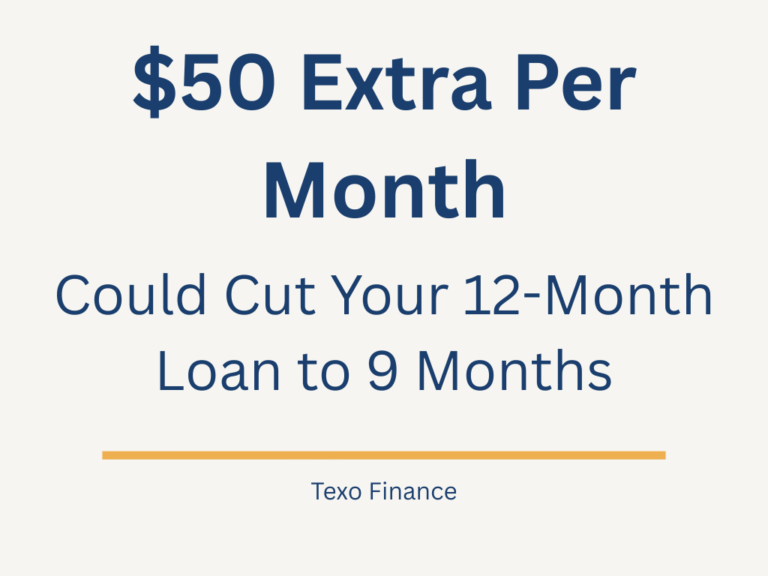
Most installment loans do not carry prepayment penalties — check yours before assuming. If they don’t, a small additional monthly payment reduces your principal (the amount you actually borrowed) faster. That means less interest accrues over the remaining term. An extra $50 payment on a $1,000 loan each month can shorten a 12-month repayment to 9 months or less.
You might receive a tax refund, a bonus, or other unexpected income while repaying. Consider putting some of it toward your loan balance. Every dollar of principal you pay off is a dollar that stops generating interest.
Tip 8: Start Building an Emergency Fund During Repayment
Saving money while you repay a loan might sound odd. But this habit is exactly what keeps you from needing to borrow again for the next emergency.
Even setting aside $20 or $25 a week builds a $250 to $350 cushion over three months. That’s enough to cover a car repair or a missed shift without borrowing. Our guide on managing all your bills, including your loan repayment. covers every other monthly bill, too.
Borrowing Responsibly Builds Financial Discipline
There is a version of taking an installment loan that improves your financial situation. There is also a version that worsens it. The difference is rarely the loan itself — it’s the decisions made before and after.
Borrowers who enter a loan with a clear budget and a repayment plan almost always come out ahead. Borrowers who borrow without a plan often fall into a cycle that gets harder to break. The same goes for treating a loan as an ongoing source of cash instead of a one-time fix.
One of the most powerful tools for staying on track is goal-setting. Pick a specific payoff date and tie it to something real. Maybe that’s clearing the loan before a renewal date, or being debt-free by summer. Or it could be hitting a savings target the month after your final payment. That gives you something concrete to work toward. Our guide on setting loan repayment goals to build financial discipline covers the SMART goal framework for loan payoff.
Want a deeper, month-by-month breakdown of responsible repayment? That includes what to do if you miss a payment and how to set up autopay. It also covers your rights as a Texas borrower. So, managing and repaying your installment loan in Texas can walk you through it in full.
Frequently Asked Questions:
What are the most important personal finance tips for Texas borrowers?
The two most important steps are budgeting before you borrow and setting up autopay right after. Knowing exactly how much you can afford to repay before you sign matters most. Cutting the risk of a missed payment afterward covers most of the other mistakes Texas borrowers make.
How much should I borrow on an installment loan in Texas?
Borrow only what you need to cover the specific expense. Calculate the total repayment cost, principal plus interest and fees. Then confirm the monthly payment fits within your leftover income after fixed expenses. Borrowing less than you qualify for is almost always the smarter decision.
Can I make extra payments on an installment loan in Texas?
Most Texas installment loans from direct lenders do not carry prepayment penalties. That means you can pay extra or pay off early without extra charges. Always confirm this in your loan agreement before signing. Extra payments reduce your principal balance faster, which lowers the total interest you pay.
What happens if I miss a payment on my Texas installment loan?
A missed payment typically triggers a late fee and may affect your credit score. Texas law gives borrowers certain protections under state regulations, but specific terms vary by lender. Contact your lender before the payment date if you know you will struggle. Many offer a short payment extension to help you avoid a formal default.
Should I save money or pay off my loan first?
Do both at the same time, even if the savings amount is small. Setting aside $20 to $25 a week while repaying builds a small buffer. That buffer protects you from having to borrow again for the next unexpected expense. Once the loan is paid off, redirect the full monthly payment amount into savings.
Conclusion:
An installment loan works best when it solves a defined problem at a cost you’ve calculated. It works even better with a repayment plan you’ve confirmed fits your budget. The borrowers who benefit most are those who treat borrowing as a financial decision, not an impulse.
If you’re still evaluating your options, compare lenders and read every fee in the contract. Make sure the monthly payment fits your budget before you sign. If you’ve already borrowed, set up autopay today. Avoid new debt and start a small savings habit alongside your repayments.
Texo Finance offers licensed installment loans to Texas residents with straightforward terms and no hidden fees. If you are ready to apply or want to check what you qualify for, start your application here.
